ABSTRACT
Antiepileptic drugs (AEDs) are primary therapeutic modalities in the treatment of epilepsy, and pharmacists play a key role in managing this condition. However, studies evaluating the relevant competency levels of pharmacists are lacking in the context of Malaysia, particularly in the interior districts of Sabah. This study aimed to assess the knowledge and confidence of government hospital pharmacists in this region regarding epilepsy and AEDs, as well as to identify areas requiring support tools. A printed questionnaire was distributed to fully-registered pharmacists working at Hospital Keningau, Hospital Tambunan, and Hospital Tenom. Among the 51 respondents, most were female (n=37, 72.5%) with practice experience of less than 10 years (n=40, 78.4%). The average knowledge score was 53.6 ± 18.3%, with 33 participants (64.7%) achieving a passing score of 50% or higher. While more than half of the pharmacists were confident in checking prescriptions, addressing drug interaction queries, counselling on AEDs, and interpreting laboratory results, over half expressed a lack of confidence in assisting patients to taper off AEDs. Respondents highlighted the need for reference tools on AED initiation and monitoring. The study concluded that while pharmacists demonstrated competence in some areas, significant gaps in knowledge and confidence persist, highlighting the need for educational resources to enhance epilepsy management.
INTRODUCTION
Approximately 50 million individuals globally suffer from epilepsy, which is a chronic, non-communicable brain disorder [1]. Nearly 80 percent of those with epilepsy reside in low- and middle-income nations [1]. Increasing life expectancy and the survival of individuals with conditions that frequently result in epilepsy, including birth trauma, traumatic brain injuries (TBI), brain infections, and stroke, may contribute to further growth in the number of people with epilepsy [1]. In Malaysia, there are 7.8 cases of lifelong epilepsy per 1000 people [2]. Epilepsy can significantly lower quality of life, as patients with epilepsy typically rate their quality of life lower than those with other chronic conditions [3–6]. One cross-sectional study conducted locally found that patients with epilepsy reported lowered energy or increased levels of weariness, poorer overall quality of life, diminished emotional well-being, poorer cognitive and social functioning, and increased fear about their conditions; all of these factors were substantially linked to depression [7]. A good quality of life is strongly associated with seizure freedom. Therefore, improving quality of life and reducing undesirable sufferings should be the primary goals of treatment [8]. Antiepileptic drugs (AEDs) are the mainstay treatment for epilepsy, yet regrettably come with adverse effects associated with their use. After the first course of antiepileptic treatment, it is estimated that up to 30% of patients remain uncontrolled, despite the fact that most individuals can be well managed with the given treatment [8]. Pharmaceutical care provided by pharmacists has proven beneficial for the management of long-term medical conditions by improving knowledge of medication therapy, adherence, and awareness of medication side effects [9,10]. A randomised clinical trial abroad showed that patients’ perceptions of epilepsy and their understanding of the condition were greatly enhanced by pharmacist-led educational initiatives [10]. Another study demonstrated that antiepileptic medication therapy overseen by pharmacists improves patient care and leads to notably better clinical and economic outcomes in hospitals [11]. A retrospective observational study conducted locally in the Therapeutic Drug Monitoring (TDM) Unit of Hospital Keningau, Sabah, demonstrated that more than 50% of epileptic patients with inadequate seizure control reported better control through a pharmacist-managed TDM service [12]. Therefore, pharmacists’ competency is an essential requirement for effective recommendations [12], and it is important to identify whether any knowledge gaps exist among our government pharmacists. To the best of our knowledge, there has yet to be a study investigating the confidence and knowledge of government pharmacists in the Sabah Interior Districts in managing AEDs. Pharmacists working in interior districts may encounter additional challenges, such as limited access to specialists, fewer neurology services, and restricted training opportunities. Understanding their competency levels is therefore essential to identify educational needs and develop targeted support tools. This baseline information obtained will help in the design of pharmacy-specific clinical tools to improve pharmacists’ competency and knowledge in enhancing epileptic patient care outcomes.
METHOD
Study Design and Participants
This cross-sectional, self-administered questionnaire study was conducted at 3 government hospitals in the interior district of Sabah, namely Hospital Keningau, Hospital Tambunan, and Hospital Tenom. All fully-registered pharmacists (FRPs) servicing at the three facilities during the study period from April 2024 to August 2024 were recruited. Pharmacists who refused to participate were excluded from the study.
Study Instrument and Distribution
The study adopted a four-domain questionnaire developed by Chandok & Mahmoud [13] with the author’s consent, which was originally used to characterize Canadian pharmacists’ knowledge and comfort in epilepsy management. The questionnaire was developed by the authors with reference to evidence-based guidelines and was assessed for clinical accuracy and validity by a clinical expert in pharmacy practice in neurology [13]. This study has been registered with the Malaysian National Medical Research Register (NMRR) under identification number NMRR ID-24-00224-BXP and has received ethical approval from the Medical Research and Ethics Committee (MREC).
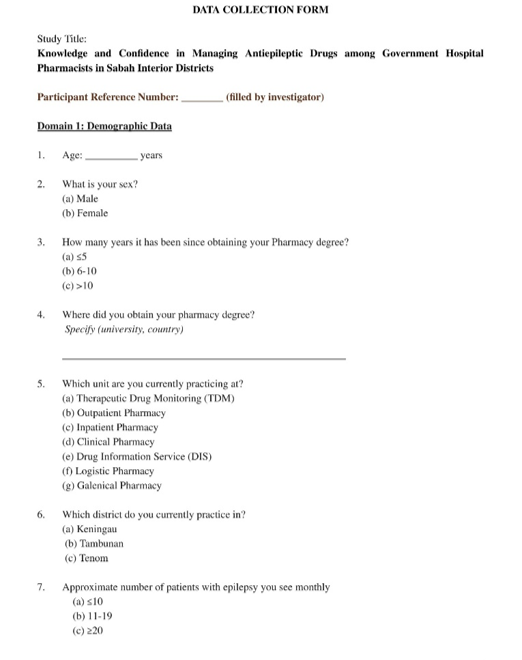
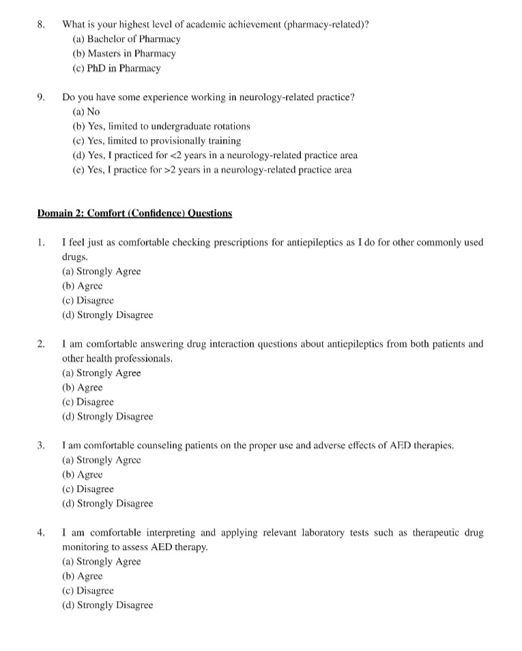
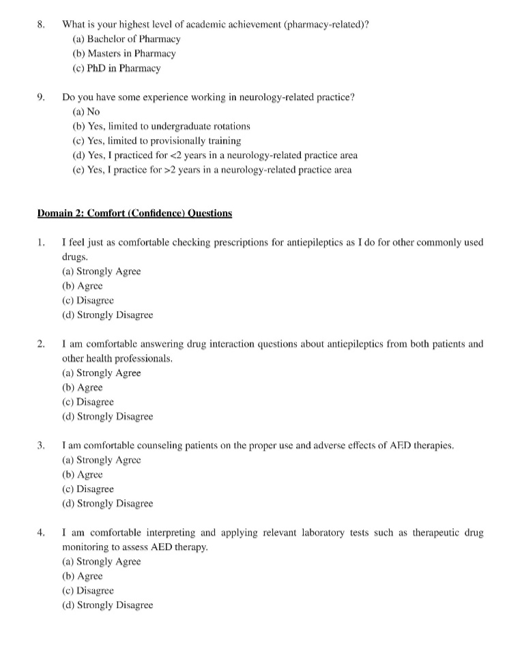
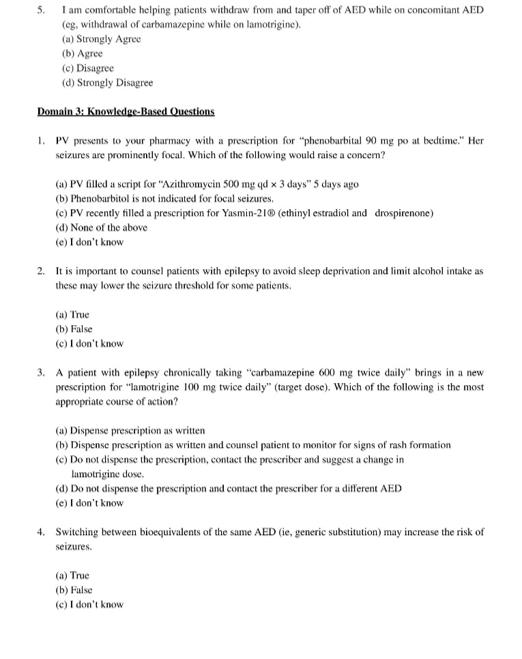
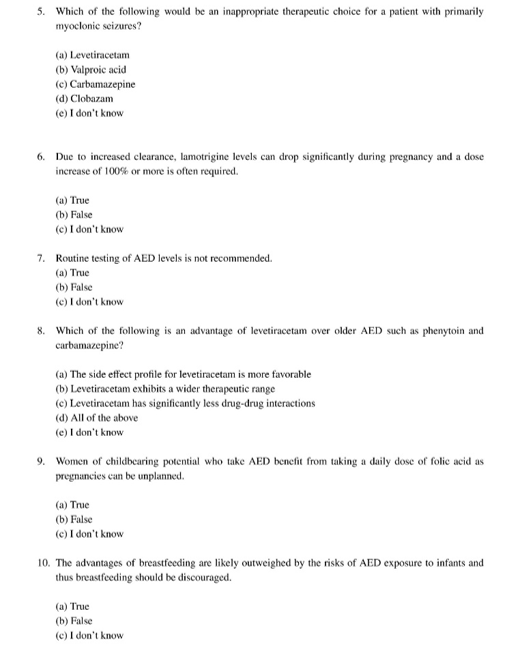
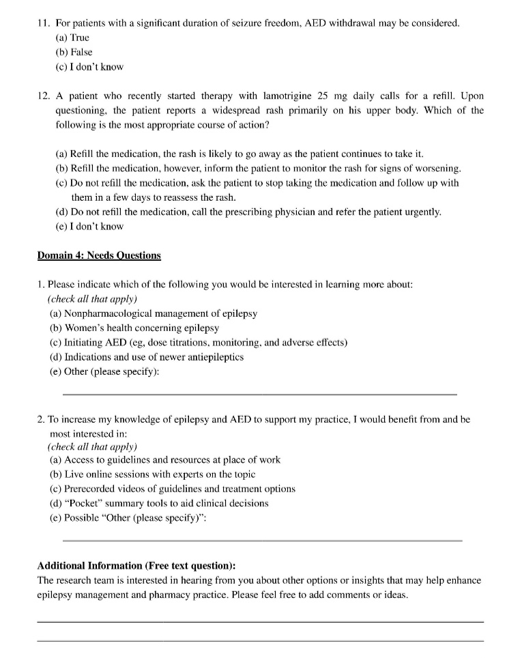
The questionnaire (Supplement 1) consisted of four domains and a total of 28 questions: (1) nine questions regarding sociodemographic data; (2) five questions assessing pharmacists’ confidence in epilepsy management; (3) twelve true or false and multiple-choice questions to evaluate knowledge of AEDs and epilepsy management; and (4) two questions with multiple answer options and an optional free-text answer to identify needs for knowledge consolidation [13].
Participants were given explanations related to the aims and objectives of the study, followed by a printed consent form provided to the participants prior to distribution of the questionnaire. Upon obtaining consent, the questionnaire was distributed to participating FRPs in the form of hard copies and collected by investigators once completed. The questionnaire was checked for incomplete or neglected questions to avoid data loss. Participants were not provided with any resources during the survey but were not refrained from using any. The survey was estimated to take approximately 15 minutes.
Pharmacists’ Confidence in Epilepsy Management
The assessment aimed to explore pharmacists’ self-reported confidence in performing their core responsibilities related to AEDs, including verifying prescriptions, identifying drug-drug interactions, providing counselling, conducting therapeutic drug monitoring (TDM), and managing tapering regimens.
Pharmacists’ Knowledge in Epilepsy Management
The knowledge component aimed to objectively evaluate pharmacists’ knowledge on significant topics such as drug-drug interactions, AED management, women’s health, and generic substitution. The questions included a combination of multiple-choice-answers and true-or-false questions. All questions included an option of ‘I don’t know’ to prevent random guessing. A passing score of 50% was employed, following the recommendation from the original questionnaire study [13]. The proportion of subjects who passed was calculated, and the correct responses to each question were quantified to better indicate the knowledge areas requiring further enhancement.
Needs Assessment
A need assessment was incorporated to recognize the interests of pharmacist in areas of concern. In addition, preferred learning tools identified by respondents could be developed further in the future. A free-text question was provided at the end of the questionnaire to highlight unmentioned tools and areas of interest in the study.
| Characteristics | Median (Interquartile range) | Range |
| Age | 30 (3) | 26-48 |
| Characteristics | n (%) | |
| Gender | ||
| Male | 14 (27.5) | |
| Female | 37 (72.5) | |
| Number of Years since Pharmacy Degree | ||
| ≤ 5 | 12 (23.5) | |
| 6 – 10 | 28 (54.9) | |
| > 10 | 11 (21.6) | |
| Country of Pharmacy Degree | ||
| Malaysia | 49 (96.1) | |
| Indonesia | 1 (2.0) | |
| Egypt | 1 (2.0) | |
| Current Work Unit | ||
| Outpatient Pharmacy | 23 (45.1) | |
| Inpatient Pharmacy | 8 (15.7) | |
| Clinical Pharmacy | 8 (15.7) | |
| Drug Information Service | 1 (2.0) | |
| Logistic Pharmacy | 8 (15.7) | |
| Administrative (Head of Pharmacy) | 3 (5.9) | |
| Current Work District | ||
| Keningau | 31 (60.8) | |
| Tambunan | 10 (19.6) | |
| Tenom | 10 (19.6) | |
| Approximate Number of Epilepsy Patients Seen Monthly | ||
| ≤ 10 | 27 (52.9) | |
| 11 – 19 | 7 (13.7) | |
| ≥ 20 | 17 (33.3) | |
| Highest Pharmacy Education Level | ||
| Bachelor of Pharmacy | 49 (96.1) | |
| Masters in Pharmacy | 2 (3.9) | |
| Experience Working in Neurology-related Practice | ||
| No | 36 (70.6) | |
| Yes, limited to undergraduate rotations | 2 (3.9) | |
| Yes, limited to provisional training | 13 (25.5) | |
Data Analysis
Descriptive analysis was used to present the overall characteristics of study participants as well as the responses from the questionnaire. Numerical data were presented as means and standard deviations (SD) or medians and interquartile ranges (IQR), depending on data normality. Categorical data were presented as frequencies and percentages. The collected data were transferred into SPSS version 26 for statistical analysis.
The confidence in managing AEDs was assessed using a 4-point Likert scale: strongly agree, agree, disagree, and strongly disagree. “Strongly agree” was allocated the highest point, while “strongly disagree” received the lowest. However, cumulative points from all questions were not calculated, as confidence in each area was evaluated individually. Conversely, scores for all knowledge questions were totalled for each participating subject to evaluate individual competency. A score of 50% or higher was considered a passing score based on a previously published pharmacist knowledge assessment study [13]. Correct answers were assigned a value of 1, while incorrect answers received a value of 0. The ’I Don’t Know’ option was considered as incorrect response. Mean scores were utilized to demonstrate overall performance. A frequency distribution analysis was also conducted to better understand participants’ performance in each knowledge domain. Results from the needs assessment were summarized in numbers and percentages for each available option.
RESULT
Demographics of the Respondents
Demographic data and experience of the responders are reported in Table I. A total of 51 subjects participated in the study, with the majority being female (n=37, 72.5%) and nearly two-thirds from Hospital Keningau (n=31, 60.8%), which is the lead hospital for the interior district of Sabah. Only two respondents (3.9%) have obtained a Master’s qualification in Pharmacy. The majority (n=49, 96.1%) graduated in Malaysia with an undergraduate Pharmacy degree. More than three-quarters of the study participants have working experience of less than 10 years (n=40, 78.4 %). Half of the pharmacists interact with 10 or fewer patients with epilepsy per month (n=27, 52.9%). Almost half of the study participants (n=23, 45.1%) practice as outpatient pharmacists. Most of the respondents (n=36, 70.6%) reported not having any experience practicing in the neurology field.
Pharmacists’ Confidence in Managing Antiepileptics Drugs
Table II reports the pharmacists’ confidence in managing AEDs in numbers and percentages. The majority of participants collectively “agreed” or “strongly agreed” that they were comfortable checking prescriptions (n=43, 84.3%), answering enquiries on drug-drug interactions (n=32, 62.8%), counselling on AEDs (n=39, 76.5%), and interpreting laboratory test results (n=34, 66.7%). However, more than 50% (n=33, 64.7%) of the subjects responded with “disagree” or “strongly disagree” regarding their confidence in helping patients withdraw from AEDs.
| Question | n (%) | |||
| Strongly Agree | Agree | Disagree | Strongly Disagree | |
| I feel just as comfortable checking prescriptions for antiepileptics as I do for other commonly used drugs. | 12 (23.5) | 31 (60.8) | 7 (13.7) | 1 (2.0) |
| I am comfortable answering drug interaction questions about antiepileptics from both patients and other health professionals. | 3 (5.9) | 29 (56.9) | 17 (33.3) | 2 (3.9) |
| I am comfortable counselling patients on the proper use and adverse effects of AED therapies. | 3 (5.9) | 36 (70.6) | 11 (21.6) | 1 (2.0) |
| I am comfortable interpreting and applying relevant laboratory tests, such as therapeutic drug monitoring, to assess AED therapy. | 5 (9.8) | 29 (56.9) | 15 (29.4) | 2 (3.9) |
| I am comfortable helping patients withdraw from and taper off of AEDs while on concomitant AEDs (e.g., withdrawal of carbamazepine while on lamotrigine). | 1 (2.0) | 17 (33.3) | 28 (54.9) | 5 (9.8) |
| Questions & Answers | Number of Response (%) |
| Please indicate which of the following you would be interested in learning more about: | |
| Nonpharmacological management of epilepsy | 32 (62.7) |
| Women’s health concerning epilepsy | 36 (70.6) |
| Initiating AEDs (e.g., dose titrations, monitoring, and adverse effects) | 46 (90.2) |
| Indications and use of newer antiepileptics | 39 (76.5) |
| Other | 6 (11.8) |
| To increase my knowledge of epilepsy and AEDs to support my practice, I would benefit from and be most interested in: | |
| Access to guidelines and resources at my place of work | 39 (76.5) |
| Live online sessions with experts on the topic | 22 (43.1) |
| Prerecorded videos of guidelines and treatment options | 23 (45.1) |
| “Pocket” summary tools to aid clinical decisions | 42 (82.4) |
| Other | 3 (5.9) |
Pharmacists’ Knowledge of Antiepileptic Drugs and Epilepsy Management
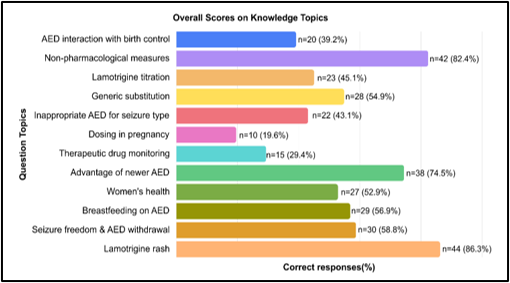
Figure I demonstrates the knowledge performance of the survey. The average score on knowledge questions was 53.6 ± 18.3%, with a maximum score of 83.3% and a minimum score of 16.7%. Thirty-three subjects (64.7%) managed to answer at least half of the questions correctly (i.e. scored 50% and above). Higher correct responses were recorded for questions pertaining to non-pharmacological management measures (n=42, 82.4%) and lamotrigine rash (n=44, 86.3%). Contrarily, less than half of the respondents answered correctly for questions related to dosing in pregnancy (n=10, 19.6%), TDM (n=15, 29.4%), AED interactions with birth control pills (n=20, 39.2%), inappropriate AEDs for seizure type (n=22, 43.1%), and lamotrigine titration (n=23, 45.1%).
Needs for Consolidating Knowledge on Managing AEDs
Table III represents the knowledge gaps identified among our local pharmacists. Participants selected multiple learning areas and tools to enhance their knowledge of AEDs and epilepsy management. Most of the respondents were keen to learn about the initiation and monitoring of AEDs (90.2%), whereas the least interest was shown toward non-pharmacological management of epilepsy (62.7%).
DISCUSSION
This study provides important baseline data on the knowledge and confidence of hospital pharmacists in managing epilepsy and antiepileptic drugs (AEDs) in the interior districts of Sabah. Overall, pharmacists demonstrated moderate knowledge (mean score 53.6%), with more than one-third failing to achieve the 50% passing threshold. While certain foundational areas showed acceptable performance, clinically significant gaps were identified in domains requiring advanced therapeutic decision-making.
The overall knowledge score is comparable to findings by Chandok A. and Mahmoud S.H., who reported a mean score of 57.6% among Canadian pharmacists [13]. Similar or marginally higher findings were reported in other studies involving healthcare professionals [13–18], suggesting that knowledge gaps in epilepsy management may not be unique to Sabah but rather reflect broader challenges in pharmacy practice education and continuing professional development. Nevertheless, contextual factors such as limited neurology exposure and resource constraints in interior districts may further compound these gaps locally.
A notable finding in this study is the discrepancy between perceived confidence and knowledge scores on certain topics, particularly in therapeutic drug monitoring (TDM) and drug-drug interactions. Although about two-thirds of respondents reported confidence in interpreting laboratory tests and addressing queries on drug interactions, only 15 (29.4%) and 20 (39.2%) participants correctly answered the knowledge question on TDM and drug-drug interactions, respectively. This discrepancy raises concerns about potential overestimation of competency. Overconfidence without adequate knowledge may inadvertently compromise patient safety, particularly with drugs that have narrow therapeutic indices such as AEDs. In comparison, a Canadian study predominantly involving community pharmacists also reported poor TDM knowledge with similarly low levels of self-reported confidence [13]. Unlike the Canadian findings, pharmacists in the present study reported relatively high confidence despite limited objective knowledge. A possible explanation is that pharmacists receive foundational exposure to TDM during provisional training or early hospital practice, which may foster confidence even when opportunities to apply and reinforce these competencies in routine practice are limited. As most respondents in the present study were practicing in outpatient settings, where TDM is performed less frequently, knowledge retention may decline over time due to infrequent application. However, this explanation should be regarded as a hypothesis based on the local training and practice context rather than a conclusion supported by the study data, as no subgroup analysis comparing pharmacists across different practice settings was performed. Future studies should investigate whether practice setting and previous TDM exposure are associated with pharmacists’ knowledge and confidence. Regarding drug-drug interactions, the question in our instrument was related to birth control, an area where hospital pharmacists have lower exposure compared to community pharmacists. This is evident in the original questionnaire study, which mainly involved community pharmacists, where a higher number of precise answers were demonstrated [13]. The low confidence level for withdrawing patients from AEDs is, however, parallel to the knowledge outcome, as only 45.1% answered the question pertaining to lamotrigine titration accurately. These findings indicate a marked disparity between knowledge and competencies, emphasizing the necessity for targeted educational initiatives in TDM, AED withdrawal, and potential drug interactions.
Women’s health issues in epilepsy emerged as one of the most critical knowledge gaps. Pharmacist’s knowledge of women’s issues in epilepsy can assessed through questions regarding (1) AED interactions with birth control, (6) dosing in pregnancy, (7) women’s health, and (8) breastfeeding while on AEDs. As the study participants are hospital pharmacists, there need to be aware of the appropriate dosing of AEDs during pregnancy. Lamotrigine clearance increases significantly during pregnancy, yet, only 9.6% of respondents were aware that dose adjustment is warranted. Conversely, in the original questionnaire study in Canada, the same question received a higher correct response of 44% from local pharmacists [13]. AEDs during pregnancy need to be adjusted appropriately to prevent breakthrough seizures during the gestational period, which could harm both the mother and the foetus. Studies have shown that uncontrolled seizures can lead to complications for foetus, such as preterm birth, low birth weight, and, in severe cases, foetal hypoxia or miscarriage [19]. Epilepsy is associated with an increased risk of maternal deaths, both during and after pregnancy, and an elevated risk of Sudden Unexpected Death in Epilepsy (SUDEP) [20]. In addition, uncontrolled seizures during pregnancy constitute another risk factor for epilepsy-related deaths [21]. In brief, measures should be taken to prevent complications associated with uncontrolled seizures during and after pregnancy by maintaining optimal seizure control while minimizing foetal exposure to antiepileptic drugs. Therefore, pharmacists need to be equipped with sufficient knowledge and confidence to handle pregnancy-related issues. Despite the poor knowledge of dosing in pregnancy, more than half of the subjects in our study acknowledged the importance of folic acid supplementation in childbearing women who are on AEDs. However, this finding remains relatively suboptimal compared to other studies, where 82% of pharmacists in Chandok A. and Mahmoud S.H. [13], 91% in Shawahna et al. [17], and 77% in McAuley et al. [16] identified the need for folic acid supplementation in women of childbearing potential. Another concerning women’s issue recognised in this study is the AED interaction with birth control. In our study, only 39.2% of participants recognized the potential interaction between phenobarbitone (90 mg daily) and oral contraceptives (ethinyl estradiol and drospirenone). However, 51% of the participants in the Canadian study identified the interaction with oral contraceptive pills (OCPs) [13]. In addition, 64.8% of pharmacists in Jairoun et al. [22], 77% in Shawahna et al [17], and 74.3% in McAuley et al. [16] identified the interaction between topiramate and OCP. This finding underscores a critical concern in the management of epilepsy among women, as it may contribute to an increased risk of unintended pregnancies [22–24]. Besides unplanned pregnancies, some AEDs are well known for their teratogenicity, which can lead to detrimental neurocognitive effects on exposed children [25]. As a result, drug-related morbidity can impose substantial physical and financial burdens on the patient. Interestingly, although women’s health questions yielded some of the lowest knowledge scores, only 70.6% of respondents expressed interest in further learning in this area. This suggests a possible lack of insight into knowledge deficiencies, underscoring the importance of awareness-building interventions before targeted education can be fully effective.
In contrast, higher knowledge scores were observed for adverse effects (86.3%) and non-pharmacological seizure management (82.4%). Prior studies assessing the adverse effects component revealed lower scores than our findings [13,14,17]. Such discrepancies highlight the greater awareness of adverse effects among hospital pharmacists. These areas likely reflect routine exposure during dispensing and counselling activities in hospital practice. The ability to recognize lamotrigine-associated rash, for example, is reassuring given its potential severity. AEDs are the mainstay for epilepsy management, which is often a lifelong therapy [26,27]. The more commonly used AEDs such as phenytoin, carbamazepine, and valproic acid have greater adverse effect profiles due to their non-linear pharmacokinetic properties, drug-drug interactions, and narrow therapeutic indices [28]. Therefore, it is crucial for pharmacists to recognise the adverse effects for timely interventions to improve patients’ quality of life.
However, knowledge limited to adverse effect recognition without proficiency in dose adjustment and interaction management may not be sufficient for comprehensive pharmaceutical care.
Low confidence and knowledge in AED tapering and titration further reinforce the need for structured education in dynamic treatment adjustments. Tapering decisions often require individualized assessment, consideration of seizure type, comorbidities, and concomitant therapies. Inadequate understanding in this area may limit pharmacists’ contributions to multidisciplinary epilepsy care. Therefore, interest in learning further about AEDs initiation, including dose titration, monitoring, and adverse effects, can be seen in the study.
Low confidence and knowledge scores reflect the need for educational interventions for improvement. Our study highlighted the requirement of educational tools similar to those in other studies [13–18]. The majority requested “pocket” summary tools to aid in clinical decision-making and access to guidelines and resources at work, similar to a study conducted in Canada [13]. Pharmacists demonstrated a preference for quick-reference resources over live online sessions with experts or pre-recorded educational videos, likely indicating the need for immediate, accessible information during ward rounds and clinical decision-making. This preference may be due to time constraints associated with increased workload and limited human resources in the current healthcare setting, which necessitates quick access to concise and practical guidance rather than time-intensive learning tools. The lower preference for detailed learning may be due to pharmacists’ limited exposure to epilepsy patients or a perceived lack of immediate clinical relevance. A quick reference guide could be beneficial as a recap material and for staying updated with medical advancements and adapting to changing guidelines. While quick-reference tools are valuable for reinforcing practice, they should complement comprehensive educational initiatives. Literature supports blended educational approaches combining structured learning with app-based or quick-reference tools to enhance retention and clinical application [29].
Initiatives to boost the confidence and knowledge of pharmacists need to be both institutional and self-directed. In resource-limited districts where neurology exposure is low, structured training modules, interdisciplinary case discussions, and integration of epilepsy management into continuing medical education programs may help bridge competency gaps. Tools such as “pocket” summaries and access to guidelines and resources at work are inclined toward self-directed learning. Therefore, continuous medical education, pre-recorded videos of guidelines and treatment options, and quick guides are equally important for improving practice.
This study also underscores the evolving role of hospital pharmacists beyond dispensing toward active participation in therapeutic optimization. As AEDs therapy often requires long-term monitoring, individualized titration, and risk mitigation strategies, pharmacists must possess both depth of knowledge and applied clinical confidence. Addressing the identified gaps may improve patient safety, reduce drug-related morbidity, and contribute to better seizure control and quality of life.
Limitations of the Research
This study has several limitations that should be acknowledged. Firstly, the study was conducted in an interior district of Sabah, which may limit generalizability to urban settings, other Malaysian states, or the entire healthcare system. Secondly, the reliance on self-reported data may introduce social desirability bias, whereby perceived confidence may not accurately reflect actual clinical competency or the quality of pharmaceutical care provided. Therefore, future studies evaluating actual clinical practice or patient outcomes would be beneficial to validate these findings. Despite these limitations, this study provides valuable baseline data on pharmacists’ knowledge and educational needs regarding AEDs management in a resource-limited setting and highlights areas for targeted educational interventions.
CONCLUSION
This study provides important baseline insights into the knowledge and confidence of hospital pharmacists in managing epilepsy and antiepileptic drugs (AEDs) in the interior districts of Sabah. Overall, pharmacists demonstrated moderate knowledge with acceptable confidence in several routine practice areas, such as prescription screening, counselling, and interpretation of laboratory results. However, notable knowledge gaps were identified in clinically complex domains, particularly therapeutic drug monitoring, AED titration and withdrawal, drug–drug interactions involving hormonal contraceptives, and management of epilepsy during pregnancy. Addressing these gaps is essential, as pharmacists play a critical role in the safe dispensing, monitoring, and optimisation of AED therapy, which directly influences seizure control, treatment safety, and patients’ quality of life. Educational tools such as pocket guides and online guideline should be designed to enhance further learning and best practices for epilepsy management. Future studies should expand to more settings statewide or even nationwide to further improve the knowledge and, consequently, the quality of service in terms of epilepsy management. Overall, strengthening pharmacists’ knowledge and confidence through targeted educational strategies and accessible clinical resources may contribute to improved pharmaceutical care and better clinical outcomes for patients living with epilepsy.
ACKNOWLEDGEMENT
The authors would like to acknowledge the support and guidance received from Sabah State Health Department.
CONFLICT OF INTEREST
The authors declare no conflict of interest.
REFERENCE
- World Health Organization. Global burden of epilepsy. Epilepsy: a public health imperative. 2019;9–17.
- Fong SL, Lim KS, Tan LA, Zainuddin NH, Ho JH, Chia ZJ, et al. Prevalence study of epilepsy in Malaysia. Epilepsy Res. 2021 Feb 1;170. https://doi.org/10.1016/j.eplepsyres.2021.106551
- Wiebe S, Bellhouse DR, Fallahay C, Eliasziw M. Burden of Epilepsy: The Ontario Health Survey. Canadian Journal of Neurological Sciences. 1999;26(4):263–70. https://doi.org/10.1017/s0317167100000354
- Tombini M, Assenza G, Quintiliani L, Ricci L, Lanzone J, Di Lazzaro V. Epilepsy and quality of life: what does really matter? Neurological Sciences. 2021 Sep 1;42(9):3757–65. https://doi.org/10.1007/s10072-020-04990-6
- Minwuyelet F, Mulugeta H, Tsegaye D, lake B, Getie A, Tsegaye B, et al. Quality of life and associated factors among patients with epilepsy at specialized hospitals, Northwest Ethiopia; 2019. PLoS One. 2022 Jan 1;17(1):e0262814. https://doi.org/10.1371/journal.pone.0262814
- Siebenbrodt K, Willems LM, von Podewils F, Mross PM, Strüber M, Langenbruch L, et al. Determinants of quality of life in adults with epilepsy: a multicenter, cross-sectional study from Germany. Neurol Res Pract. 2023 Dec 1;5(1):1–10. https://doi.org/10.1186/s42466-023-00265-5
- Mohamed S, Gill JS, Tan CT. Quality of life of patients with epilepsy in Malaysia. Asia Pac Psychiatry. 2014 Mar;6(1):105–9. https://doi.org/10.1111/j.1758-5872.2012.00192.x
- Goldenberg MM. Overview of Drugs Used For Epilepsy and Seizures: Etiology, Diagnosis, and Treatment. Pharmacy and Therapeutics. 2010 Jul;35(7):392. PubMed PMID: 20689626.
- Fischer LR, Scott LM, Boonstra DM, DeFor TA, Cooper S, Elkema MA, et al. Pharmaceutical care for patients with chronic conditions. J Am Pharm Assoc (Wash). 2000;40(2):174–80. https://doi.org/10.1016/s1086-5802(16)31061-0
- Eshiet U, Okonta J, Ukwe C. The efficacy of a pharmacist implemented educational treatment programme for people with epilepsy: A report of a randomised controlled trial. Seizure. 2019 Jul 1;69:147–53. https://doi.org/10.1016/j.seizure.2019.04.011
- Bond CA, Raehl CL. Clinical and economic outcomes of pharmacist-managed antiepileptic drug therapy. Pharmacotherapy. 2006 Oct;26(10):1369–78. https://doi.org/10.1592/phco.26.10.1369
- Chun WC, Raman S. Pharmacist-managed Therapeutic Drug Monitoring Service for Antiepileptic Drugs and Improved Seizure Control. Malaysian Journal of Pharmaceutical Sciences. 2018;16(1):37–43. https://doi.org/10.21315/mjps2018.16.1.3
- Chandok A, Mahmoud SH. A Survey of Canadian Pharmacists’ Knowledge and Comfort in the Management of Epilepsy and Antiepileptic Drugs. J Pharm Technol. 2022 Apr 1;38(2):95–105. https://doi.org/10.1177/87551225211069489
- Roth Y, Neufeld MY, Blatt I, Guy-Alfandary S, Rasaby S, Ekstein D, et al. An evaluation of pharmacist knowledge on treatment with antiepileptic drugs. Seizure. 2016 Jan 1;34:60–5. https://doi.org/10.1016/j.seizure.2015.11.007
- Sengxeu N, Boumediene F, Vorachit S, Chivorakoun P, Souvong V, Manithip C, et al. Differences in knowledge about epilepsy and antiepileptic drugs among pharmacy-dispensing workers in Cambodia and in Lao PDR. Epilepsy Behav. 2020 Feb 1;103(Pt A). https://doi.org/10.1016/j.yebeh.2019.106834
- McAuley JW, Casey J, Long L. An evaluation of pharmacists’ knowledge of women’s issues in epilepsy. Epilepsy Behav. 2009 Jan;14(1):243–6. https://doi.org/10.1016/j.yebeh.2008.10.018
- Shawahna R, Atrash A, Jebril A, Khalaf A, Shaheen E, Tahboosh H. Evaluation of pharmacists’ knowledge of women’s issues in epilepsy: A cross-sectional study in Palestinian pharmacy practice. Seizure. 2017 Mar 1;46:1–6. https://doi.org/10.1016/j.seizure.2017.01.002
- Ali MAO, Mahgoub EAA, Nimir M, Ali KM. Knowledge of Pharmacists about Anti-epileptic Drugs in a Developing Country. Curr Drug Saf. 2020 Jul 30;15(1):32–7. https://doi.org/10.2174/1574886314666190729114946
- Ji Z, Nie J, Shen Q, Fu Z. Antiepileptic drugs and foetal disorders: analysis of 20-year data from the pharmacovigilance center. Front Pharmacol. 2025 Feb 26;16:1556598. https://doi.org/10.3389/fphar.2025.1556598
- Edey S, Moran N, Nashef L. SUDEP and epilepsy-related mortality in pregnancy. Epilepsia. 2014 Jul 1;55(7):e72–4. https://doi.org/10.1111/epi.12621
- Leach JP, Smith PE, Craig J, Bagary M, Cavanagh D, Duncan S, et al. Epilepsy and Pregnancy: For healthy pregnancies and happy outcomes. John Paul Leach on behalf of the multispecialty UK epilepsy mortality group. Seizure. 2017 Aug 1;50:67–72. https://doi.org/10.1016/j.seizure.2017.05.004
- Jairoun AA, Al-himyari SS, Shahwan M, Hassan N, AL-Tamimi S, Jairoun M, et al. Factors influencing community pharmacists’ knowledge about women’s issues in epilepsy. Front Public Health. 2023;11. https://doi.org/10.3389/fpubh.2023.1251393
- Samba Reddy D, Associate Professor Rp. Clinical pharmacokinetic interactions between antiepileptic drugs and hormonal contraceptives. Expert Rev Clin Pharmacol. 2010 Mar;3(2):183. https://doi.org/10.1586/ecp.10.3
- Reimers A, Brodtkorb E, Sabers A. Interactions between hormonal contraception and antiepileptic drugs: Clinical and mechanistic considerations. Seizure. 2015 May 1;28:66–70. https://doi.org/10.1016/j.seizure.2015.03.006
- Johnson EL. Contraception for Women with Epilepsy. Current Obstetrics and Gynecology Reports 2018 7:4. 2018 Oct 17;7(4):146–52. https://doi.org/10.1007/s13669-018-0250-6
- Chen Z, Brodie MJ, Liew D, Kwan P. Treatment Outcomes in Patients With Newly Diagnosed Epilepsy Treated With Established and New Antiepileptic Drugs: A 30-Year Longitudinal Cohort Study. JAMA Neurol. 2018 Mar 1;75(3):279–86. https://doi.org/10.1001/jamaneurol.2017.3949
- Kwan P, Schachter SC, Brodie MJ. Drug-Resistant Epilepsy. 2011. Report. https://doi.org/10.1056/nejmra1004418
- Ma M, Peng Q, Gu X, Hu Y, Sun S, Sheng Y, et al. Pharmacist impact on adherence of valproic acid therapy in pediatric patients with epilepsy using active education techniques. Epilepsy and Behavior. 2019 Sep 1;98:14–8. https://doi.org/10.1016/j.yebeh.2019.06.003
- Bucklin BA, Asdigian NL, Hawkins JL, Klein U. Making it stick: use of active learning strategies in continuing medical education. BMC Med Educ. 2021 Dec 1;21(1):1–9. https://doi.org/10.1186/s12909-020-02447-0
APPENDIX
Supplement 1
Please cite this article as:
Malarvili Manika Wasagam, Joel Oneil Joseph, Stefaney Kinjon, Ivy Pang Chiang Chiang, Rynn Fredrick Sanusi @ Lamusik, Nur Sarah Saleh and Fong Pui Wun Fiona, Knowledge and Confidence in Managing Antiepileptic Drugs among Government Hospital Pharmacists in the Interior Districts of Sabah. Malaysian Journal of Pharmacy (MJP). 2026;1(12):79-86. https://mjpharm.org/knowledge-and-confidence-in-managing-antiepileptic-drugs-among-government-hospital-pharmacists-in-the-interior-districts-of-sabah/